
Refractive surgery is an optional eye surgery that aims to improve the refractive state of the eye, thereby decreasing or eliminating dependency on corrective lenses. It involves various surgical techniques to reshape the cornea or implant lenses to correct vision disorders such as myopia (nearsightedness), hyperopia (farsightedness) and astigmatism.
If you have a refractive error, such as near-sightedness(myopia), farsightedness (hyperopia) or astigmatism, refractive surgery is a method for correcting the refractive error and reducing the dependence on spectacles. There are various surgical procedures for correcting or adjusting your eye's focusing ability by reshaping the cornea or by implanting a lens inside the eye. The most widely performed type of refractive surgery is LASIK (Laser-assisted in situ keratomileusis), where a laser is used to reshape the cornea.
Refractive surgeries are performed by ophthalmologists, medical doctors who are specialized in the surgical treatments of the eye. It is an outpatient procedure and will require postoperative drops for a period of 6 weeks to minimize inflammation and discomfort. The postoperative visits are usually scheduled on day 1, 1 week and 1 month after the procedure.
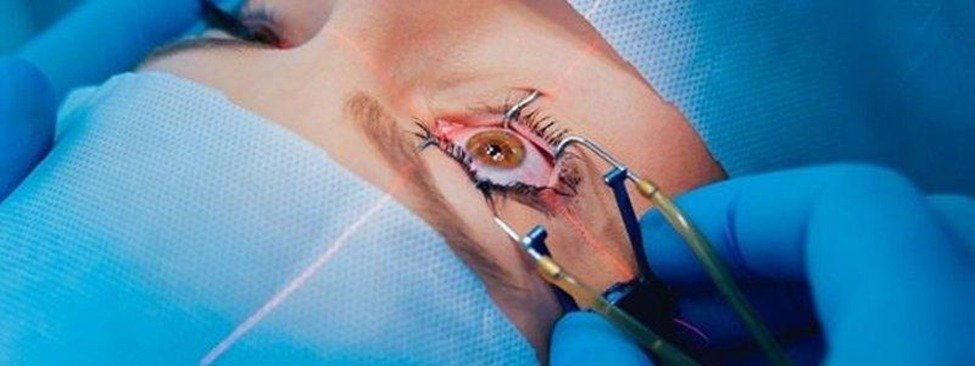
Standard LASIK involves correcting of the refractive error like myopia, hyperopia or astigmatism as calculated in the standard refractions.
Photorefractive Keratectomy (PRK) is an elective outpatient laser eye surgery for vision correction to improve vision and reduce or eliminate the need for eyeglasses or contact lenses.
In PRK surgery, the surgeon uses the excimer laser to reshape the curvature of the cornea. Prior to LASIK, PRK surgery was the most commonly performed laser eye surgery for vision correction. PRK differs from LASIK, in that the surgeon does not create a flap. PRK surgery is best suited for patients with thinner cornea, or with vocational or sports-related limitations where a corneal flap is contraindicated.
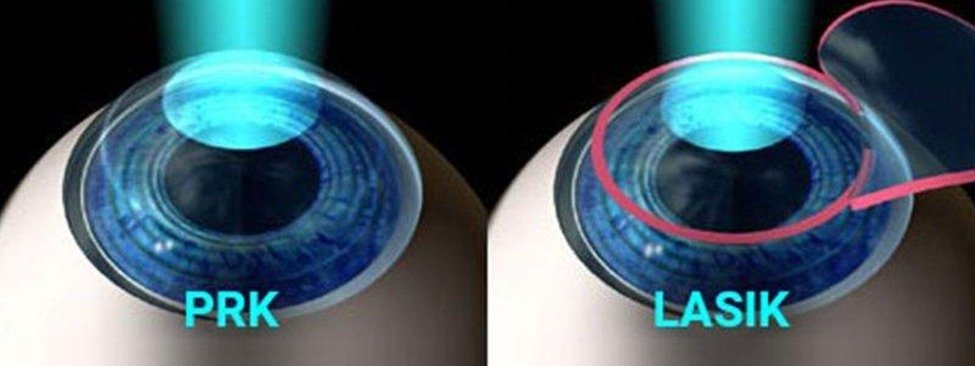
Here’s how the PRK surgery procedure works:
The PRK laser vision correction process is completed in approximately five minutes. Upon completion, the surgeon places a clear bandage contact lens on the cornea to protect it and applies eye drops. Often, both eyes are treated on the same day.
An Implantable Contact Lens (ICL), also known as a phakic intraocular lens (IOL), is a type of refractive surgery used to correct vision problems such as myopia (nearsightedness), hyperopia (farsightedness), and astigmatism. The ICL is a thin Collamer lens implanted inside the eye, between the iris and the natural lens. It works by refracting light properly onto the retina, improving vision. ICLs are suitable for patients with high refractive errors or those who are not candidates for LASIK or other laser vision correction procedures. The procedure is reversible, and the lens can be removed or replaced if needed. Benefits include improved vision, reduced dependence on glasses or contact lenses, and quick recovery. However, as with any surgery, there are potential risks and complications.
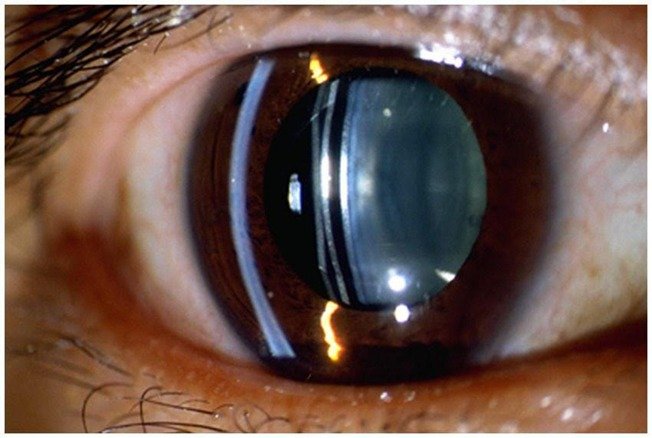
The preoperative assessment for LASIK is a comprehensive evaluation to determine a patient's suitability for refractive surgery. The assessment includes a thorough medical history, visual acuity testing, refraction, corneal topography (corneal curvature), pachymetry (corneal thickness) and retinal evaluation. The patient’s pupil size, dry eye status, and overall ocular health are evaluated.
This assessment helps identify potential risks and ensures that the patient has realistic expectations from the procedure. By carefully selecting suitable candidates, the risk of complications can be minimized, and optimal outcomes can be achieved, resulting in improved vision and patient satisfaction. If a person is a contact lens wearer, contact lenses are to be discontinued for two weeks prior to assessment, in order to obtain accurate measurements.

Managing Director
M.D.(AIIMS) D.N.B., F.RCS (Edinburgh & Glasgow)
stethoscope_arrow Cataract & IOL Services, LASIK & Refractive Surgery, Cornea Services, General Ophthalmology
event_available OP Days:
Monday,Tuesday,Thursday